Showing 17–27 of 27 results
-
£3.00
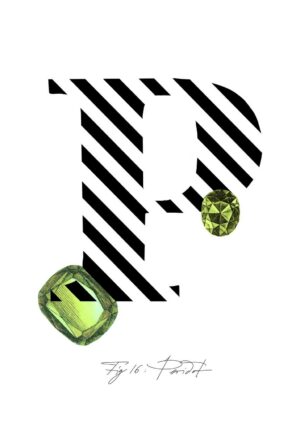
P is for Peridot. Peridots are known for their characteristically light and lustrous olive green colour. The overall depths and shade of green is dependent on the iron content within the gem. The Gemstone Alphabet combines a minimalist aesthetic of bold striped initial letters with geometrically striking and unusual gemstones and minerals. Science..but sexy!
-
£3.00
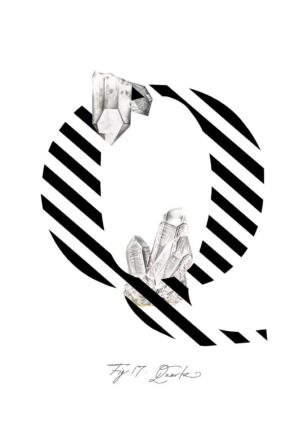
Q is for Quartz. Quartz is a hard crystalline mineral composed of silicon and oxygen atoms. There are many varieties of quartz, of which several are semi-precious stones. The Gemstone Alphabet combines a minimalist aesthetic of bold striped initial letters with geometrically striking and unusual gemstones and minerals. Science..but sexy!
-
£3.00
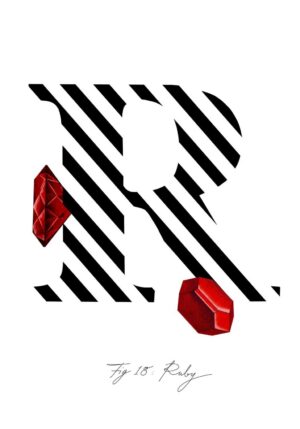
R is for Ruby. Rubies range from bright pink to deep red and are one of the most striking gemstones because of it. The name ruby comes from the Latin ruber meaning red. Rubies are part of the traditional cardinal gems, along with amethyst, sapphire, emerald, and diamond. The Gemstone Alphabet combines a minimalist aesthetic…
-
£3.00
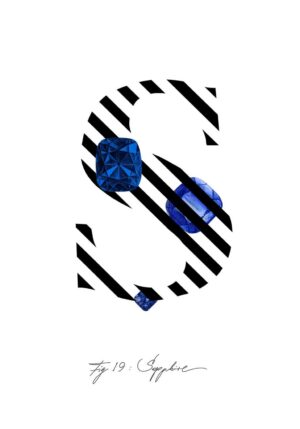
S is for Sapphire. Sapphire gemstones are most known for their mesmerising blue colour. They are not just pretty though, as they are also the 3rd hardest mineral, they are also used in industrial, non-ornamental applications. The Gemstone Alphabet combines a minimalist aesthetic of bold striped initial letters with geometrically striking and unusual gemstones and…
-
£3.00
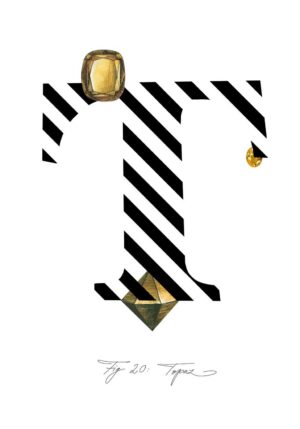
T is for Topaz. Brazil is one of the largest producers of topaz, some clear topaz crystals can weigh hundreds of pounds. The Gemstone Alphabet combines a minimalist aesthetic of bold striped initial letters with geometrically striking and unusual gemstones and minerals. Science..but sexy!
-
£3.00
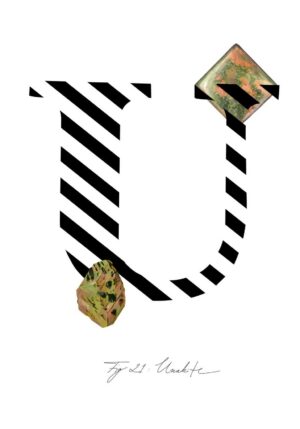
U is for Unakite. Unakite is a semi-precious stone and an altered form of granite, giving it a characteristic pink and green appearance. The Gemstone Alphabet combines a minimalist aesthetic of bold striped initial letters with geometrically striking and unusual gemstones and minerals. Science..but sexy!
-
£3.00
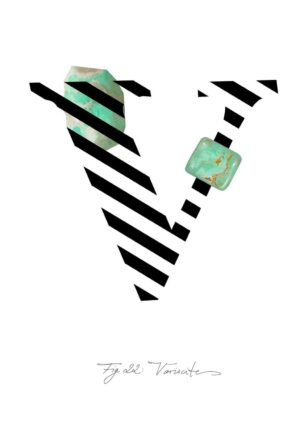
V is for Variscite. Variscite can be confused with turquoise in appearance although variscite is usually greener in colour. The green colour comes from small amounts of chromium. The Gemstone Alphabet combines a minimalist aesthetic of bold striped initial letters with geometrically striking and unusual gemstones and minerals. Science..but sexy!
-
£3.00
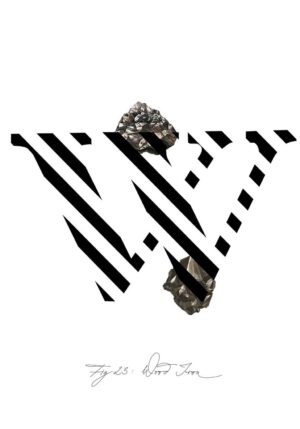
W is for Wood Iron. Wood Iron is used as a synonym for Goethite and Limonite…while usually quite dark and unspectacular to look at, rare finds can show beautiful crystal growths. The Gemstone Alphabet combines a minimalist aesthetic of bold striped initial letters with geometrically striking and unusual gemstones and minerals. Science..but sexy!
-
£3.00
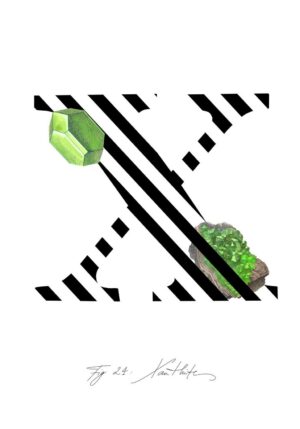
X is for Xanthite. Xanthite is a variety of Vesuvianite – a silicate mineral. It can appear brown, green, yellow, or blue. The Gemstone Alphabet combines a minimalist aesthetic of bold striped initial letters with geometrically striking and unusual gemstones and minerals. Science..but sexy!
-
£3.00
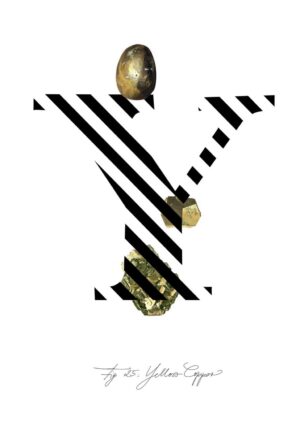
Y is for Yellow Copper. ellow Copper is actually a more colloquial name for minerals and alloys with high copper content….such as brass… The Gemstone Alphabet combines a minimalist aesthetic of bold striped initial letters with geometrically striking and unusual gemstones and minerals. Science..but sexy!
-
£3.00
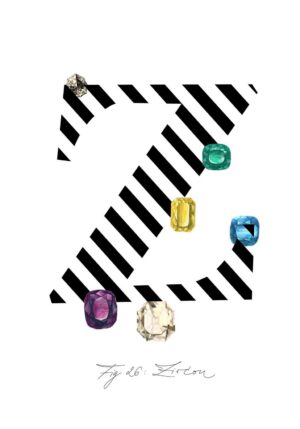
Z is for Zircon. Zircon crystals occur in a bunch of colours from red, brown, blue, colourless and green. The Gemstone Alphabet combines a minimalist aesthetic of bold striped initial letters with geometrically striking and unusual gemstones and minerals. Science..but sexy!